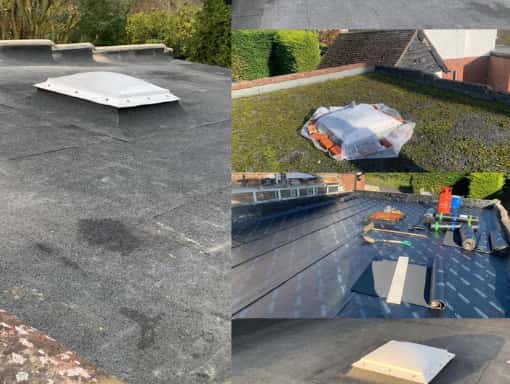
An older roof can appear perfectly serviceable for months and then suddenly develop a leak, lose tiles or show signs of deterioration after a period of difficult weather. This apparent unpredictability occurs because roofs rarely age evenly. Different components deteriorate at different rates, and small weaknesses can remain unnoticed until changing weather conditions expose them.
For homeowners in Paddock Wood, Kent, understanding how an ageing roof changes over time can make it easier to recognise when professional attention is needed. At Paddock Wood Roofing, we assess roofing systems as a whole, looking beyond the most obvious defect to establish whether other areas are also beginning to deteriorate.
Roofs Do Not Wear Out Evenly
A roof consists of numerous interconnected components, including the external covering, battens, underlay, flashing, ridges and structural timbers. These elements are exposed to different levels of weathering depending on their position.
One section may remain in good condition while another begins to weaken.
Factors influencing this uneven deterioration include:
- Exposure to prevailing weather
- Roof orientation
- Areas where rainwater is concentrated
- Previous repairs
- Differences in material condition
- Vulnerable roof junctions
This means the overall condition of an ageing roof cannot always be judged from one visible section.
Roofing Materials Gradually Lose Their Resilience
Tiles, slates, mortar, membranes and other roofing materials are designed for long-term exposure, but repeated weathering eventually changes their condition.
Older materials may become more susceptible to:
- Cracking
- Movement
- Surface deterioration
- Loosening
- Water penetration
A component that previously tolerated strong weather may eventually reach a point where comparatively ordinary conditions are enough to cause failure.
Small Weaknesses Can Remain Hidden
One reason older roofs can seem unpredictable is that deterioration frequently begins beneath the visible covering.
For example, water entering through a minor defect may affect underlay or battens without immediately creating an obvious internal leak. The homeowner may therefore have little indication that anything is wrong.
Problems can develop within:
- Roofing underlay
- Timber battens
- Roof junctions
- Flashing details
- Supporting timbers
By the time symptoms become visible inside the property, deterioration may have been developing for some time.
Previous Repairs Can Age Differently
It is common for an older roof to have undergone several repairs during its lifetime.
A replacement tile installed years after the original roof may still be in excellent condition while surrounding materials have become considerably older. Flashing, mortar and repaired sections can also have different remaining lifespans.
Over time, this creates a roofing system containing components in very different conditions.
The fact that one previous repair remains sound does not necessarily mean another part of the roof will perform equally well.
Weather Can Expose Existing Weaknesses
Strong winds and heavy rainfall do not always create roofing defects from nothing. They frequently reveal weaknesses that were already developing.
For example, wind may dislodge a tile whose fixing has gradually deteriorated, while persistent rainfall may expose a small defect that had previously allowed only limited moisture penetration.
This is why a roofing problem can appear suddenly even though the underlying deterioration has occurred gradually.
Water Can Travel Away from the Original Defect
Roof leaks can be particularly difficult to interpret because the location of an internal damp patch does not necessarily correspond with the point where water entered.
Once beneath the roof covering, moisture can travel along:
- Timbers
- Underlay
- Battens
- Roof junctions
It may then appear inside the property some distance from the original defect.
Professional leak investigation therefore involves identifying the actual entry point rather than simply treating the location where water becomes visible.
Several Minor Defects Can Combine
An ageing roof may contain numerous small imperfections that individually appear insignificant.
For example, there might be:
- One slightly displaced tile
- Minor deterioration around flashing
- Ageing mortar at a ridge
- A weakened section of underlay
Individually, these issues may not immediately affect the property. Collectively, however, they can reduce the roof’s ability to withstand difficult weather.
This accumulation of smaller defects is one reason an older roof can begin experiencing problems more frequently.
Recurring Repairs Can Indicate Wider Deterioration
Occasional roof repairs are normal throughout the lifespan of a property. However, when different defects begin appearing repeatedly, it is worth considering the condition of the entire roofing system.
Warning signs may include:
- Leaks appearing in different locations
- Increasing numbers of slipped or damaged tiles
- Repeated flashing problems
- Multiple sections requiring attention
- Repairs becoming necessary more frequently
At this stage, a broader roof assessment can provide more useful information than simply treating each problem separately.
Why Regular Roof Inspections Become More Important with Age
An ageing roof benefits particularly from periodic professional inspection because early deterioration is often difficult to identify from ground level.
An experienced roofer can examine areas such as:
- Tiles and slates
- Ridge details
- Flashing
- Roof valleys and junctions
- Visible signs of movement
- Areas vulnerable to water ingress
Finding developing defects early allows targeted repairs to be completed while the surrounding roofing remains serviceable.
When Is Repair Still Appropriate?
An old roof does not automatically need replacing.
If deterioration is confined to a specific area and the remainder of the roofing system is sound, a professional repair can restore effective protection.
Repairs may be appropriate for problems such as localised tile damage, defective flashing or an isolated leak.
The important consideration is whether the repair addresses a specific fault or whether it is simply one of many increasingly frequent interventions.
When Should Replacement Be Considered?
There may eventually come a point when deterioration is too widespread for repeated repairs to provide dependable long-term performance.
A professional assessment may identify:
- Extensive deterioration across the roof covering
- Numerous recurring leaks
- Widespread problems beneath the tiles or slates
- Multiple ageing components approaching failure
- Significant differences between previously repaired and original areas
In these circumstances, renewing the roofing system can provide a more consistent and reliable solution.
Professional Roof Assessment in Paddock Wood, Kent
Understanding an ageing roof requires more than identifying the latest visible problem. Its history, materials, previous repairs and overall condition should all be considered before deciding what work is appropriate.
At Paddock Wood Roofing, we provide professional roofing services throughout Paddock Wood, Kent. Our approach focuses on identifying the cause of roofing problems and assessing the wider condition of the roof so homeowners can make informed decisions about repairs, maintenance or replacement.
Conclusion
An ageing roof can become unpredictable because its individual components do not deteriorate at exactly the same rate. Hidden weaknesses, previous repairs, weather exposure and gradual material deterioration can combine until a roof that previously appeared reliable begins developing recurring problems.
This does not mean every older roof requires replacement. Many can continue performing effectively with appropriate maintenance and timely repairs. However, increasing numbers of defects should be treated as a reason to assess the complete roofing system rather than simply waiting for the next problem to appear.
If your roof in Paddock Wood, Kent is beginning to require more frequent attention, contact Paddock Wood Roofing. A professional assessment can identify developing weaknesses and determine the most appropriate work to keep your property reliably protected.
Call us on: 01892 352899
Click here to find out more about Paddock Wood Roofing
Click here to complete our contact form and see how we can help with your roofing needs.